



What Is Plywood?
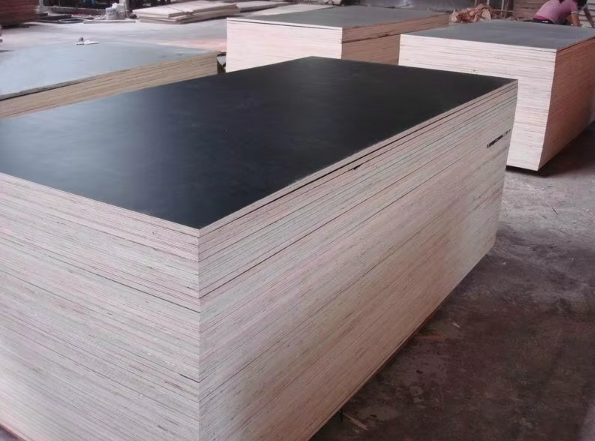
Plywood is an engineered wood product made by gluing together thin layers of wood veneer. These layers are arranged with their grain direction alternating at right angles, forming a cross-laminated structure. This construction provides plywood with excellent strength, dimensional stability, and resistance to warping, splitting, and moisture-related deformation.
To ensure structural balance, plywood is typically manufactured with an odd number of layers commonly 3, 5, 7, or more. This design makes it more stable and versatile than solid wood in many scenarios.
Plywood panels come in a variety of thicknesses, core types, sizes, and surface finishes depending on their intended use.

How Is Plywood Made?
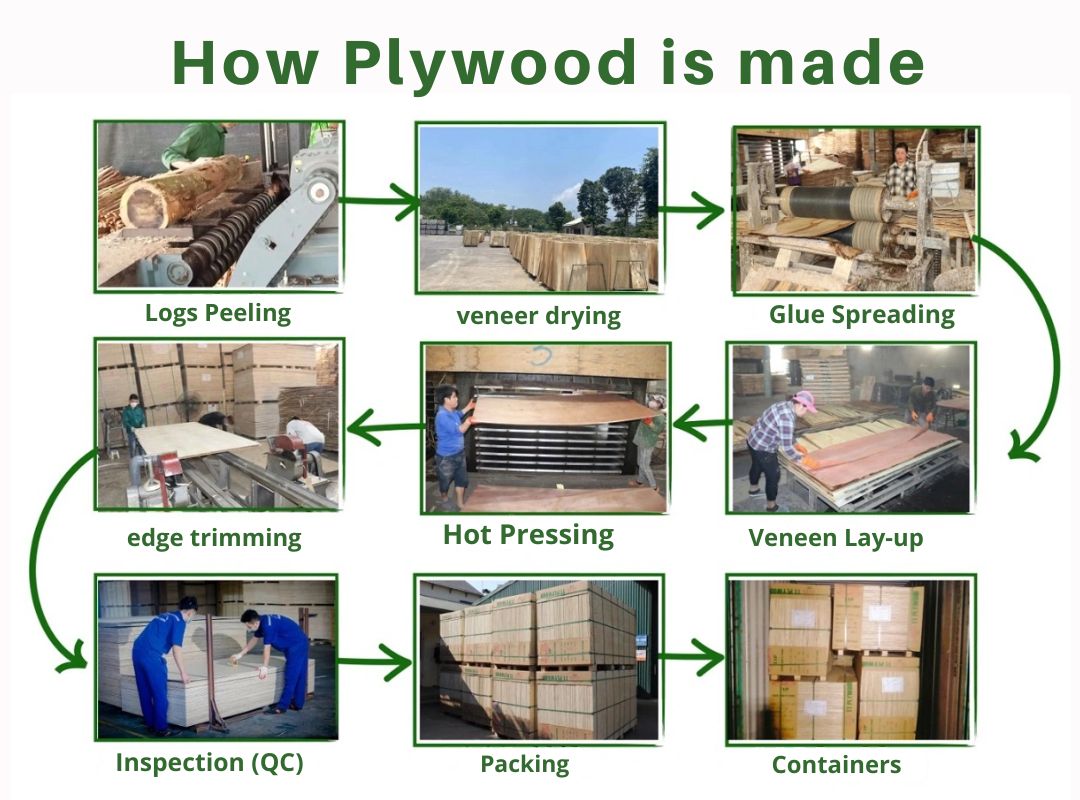
The manufacturing process begins by peeling logs into thin sheets of veneer. These sheets are then dried, graded, and bonded together with adhesives.
The type of glue used is crucial. For example:
MR (Moisture-Resistant) glue is used for interior-grade plywood.
WBP (Weather and Boil-Proof) glueor phenolic resins are used for exterior and marine-grade plywood.
After glue application, the veneers are assembled with alternating grain directions and hot-pressed under heat and pressure to form a single, durable panel. The outer layers, known as face veneers, are selected for appearance, while core layers may vary in quality depending on the plywood grade.